

An Honest Answer.
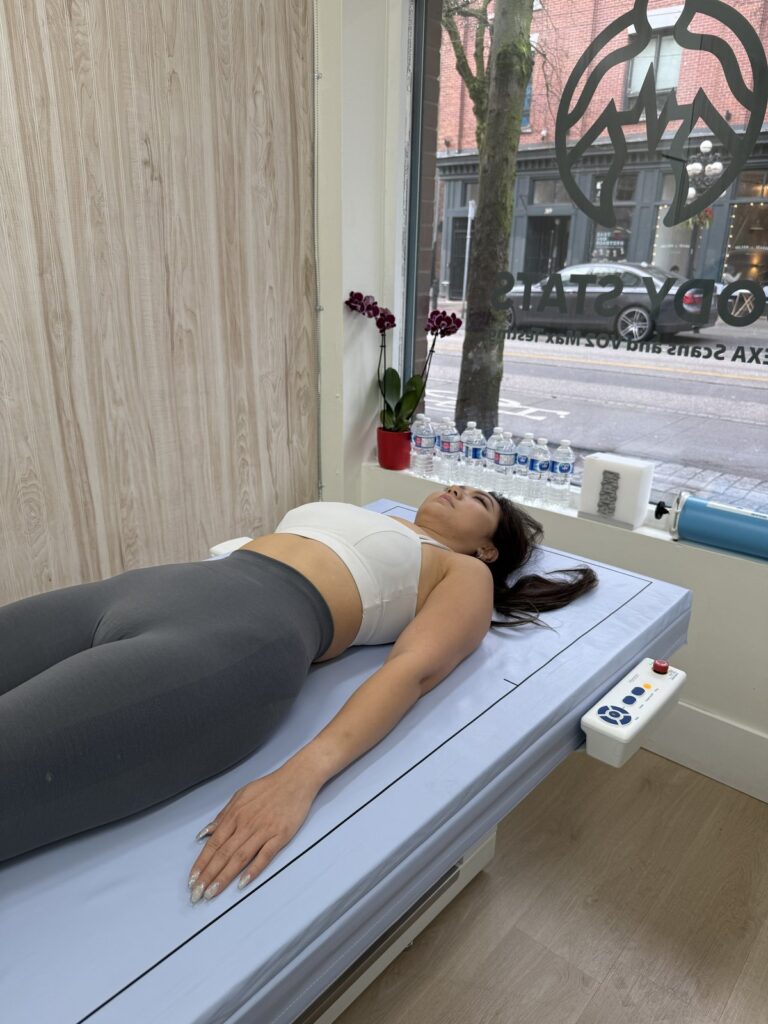
DEXA scans cost money. Worth it for some people, overkill for others, and useful for almost nobody every week. Here’s where the line actually sits.
Decide for YourselfThe honest answer to “are DEXA scans worth it” is: it depends entirely on what you’re trying to accomplish. They’re spectacular for some use cases, mediocre for others, and overkill for a few. We sell DEXA scans for $29.99, so we’d love for everyone to book one — but here’s the genuine framework for deciding whether DEXA scans are worth it for you specifically.
- Worth it if you’re tracking active fat loss, muscle gain, or athletic asymmetry.
- Worth it if you’re over 40 and want bone mass data alongside body comp.
- Maybe if you’re just curious about your numbers — one baseline scan is plenty.
- Not worth it if you’re already at a healthy weight, training consistently, with no goal.
Where DEXA earns its keep
1. Active fat loss or muscle gain phases
The single most useful DEXA application. Without DEXA, you can’t tell if your weight loss is fat, muscle, or water. With DEXA every 8–12 weeks, you adjust calories and protein with real data. The difference between a successful cut and one that strips muscle is exactly this feedback loop.
2. Athletes tracking asymmetries
Distance runners, lifters, and field-sport athletes routinely have left-right asymmetries from training patterns or old injuries. Regional DEXA breakdowns flag >5% differences before they become real injuries. Worth it for any serious recreational athlete.
3. Adults over 40
Bone mass becomes meaningful past 40. Visceral fat becomes a more important metabolic marker. DEXA gives you both alongside body comp, in one 7-minute scan. For longevity-oriented adults, an annual DEXA is high-leverage.
4. People who’ve never measured properly
If your only data is a bathroom scale, your body composition picture is wrong. A single baseline scan can be eye-opening — body fat percentage, regional breakdown, visceral fat, bone mass. Most clients find the actual numbers different from what they expected.
For $29.99, an annual DEXA is one of the cheapest data points you can buy on yourself. The ROI mostly comes down to whether you’ll act on it.
Where DEXA isn’t worth it
1. You’re already happy with your physique and not changing anything
If your routine works, your weight is stable, you train regularly, and you sleep well — you don’t need data to prove it. A DEXA scan in this case is interesting but not actionable.
2. You scan more often than every 4–6 weeks
The day-to-day measurement noise (water, glycogen, recent meals) starts to overwhelm the actual signal at high frequency. Two scans 7 days apart will often show 1% body fat difference that isn’t real.
3. You won’t change behavior based on the result
If you’ll see your body fat at 28% and shrug, the scan is just trivia. The value is in adjusting nutrition, training, or sleep based on what the scan shows.
How DEXA stacks up against the alternatives, honestly
| Method | Best for | Worth it when |
|---|---|---|
| DEXA | Tracking change, asymmetry, bone mass | Active goal, every 8–12 weeks |
| InBody / smart scale | Daily weight check | Daily — never trust the body fat reading |
| Skinfolds | Field measurement | If you have a skilled assessor and a baseline |
| BodPod | Lab-grade body comp without X-ray | Pregnancy, frequent testing, X-ray-averse |
| Mirror + photos | Subjective progress check | Always — pair with DEXA quarterly |
The cost-vs-value math
At $29.99 per scan, four DEXA scans a year (every 12 weeks) costs $120. The same year of:
- One personal trainer session at a gym: $80–$150.
- An annual physical without a body comp test: $0 with a doctor, $200+ private.
- Most premium fitness apps: $100–$200/year.
The value isn’t in any single scan; it’s in the time-series. Watching your visceral fat drop 200g across a cut, or your right-leg lean mass catch up to your left after rehab, or your bone mass hold steady through a 6-month travel period — those are the moments that justify the cost.
What we’d tell our friends
Get a baseline. If your numbers reflect what you expected, no urgency to scan again — once a year as a checkup is fine. If they surprise you (most do), build a quarterly cadence and use the data to adjust. Skip the scans during stable maintenance periods.
Frequently asked questions
Are DEXA scans dangerous?
No. The radiation dose is roughly equivalent to a one-hour flight. We don’t scan pregnant clients out of caution.
How accurate are DEXA scans really?
Coefficient of variation is under 1.5% for high-precision scanners. Same person scanned twice on the same day rarely changes by more than 1 percentage point.
What’s the cheapest way to get a DEXA in Canada?
BodyStats Vancouver and Toronto at $29.99 per scan, or $20/month for unlimited scans. Most other Canadian clinics charge $80–$499.
Will a DEXA scan change my life?
Probably not. But it’ll change your data, and your decisions get better with better data.
Decide for yourself.
Book a baseline DEXA scan from $29.99 at BodyStats Vancouver or Toronto. Decide if it’s worth it after you see the numbers.
Book a Baseline Scan