What is a DEXA scan and how does it work? +
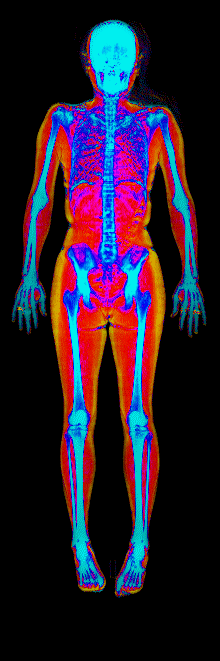
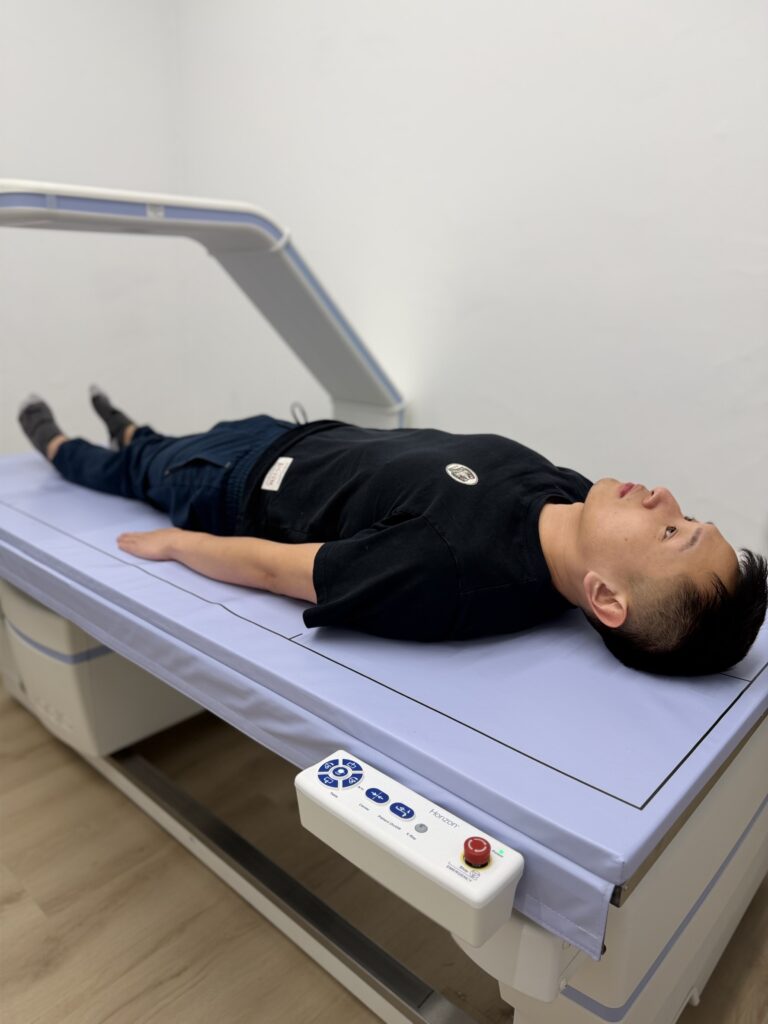
DEXA (Dual-Energy X-ray Absorptiometry) uses two low-dose X-ray beams to measure your body composition with high precision. The scan takes about 7 minutes and provides a detailed breakdown of fat mass, lean mass, and bone mineral content across every region of your body. It’s considered the gold standard for body composition analysis.
How accurate is DEXA compared to other body fat methods? +
DEXA is accurate to within 1–2% for body fat measurement, making it significantly more reliable than bioelectrical impedance scales (4–8% margin), calipers (3–5% margin), or visual estimates. It’s the only widely available method that provides regional body composition data — showing exactly where fat and muscle are distributed.
How should I prepare for my DEXA scan? +
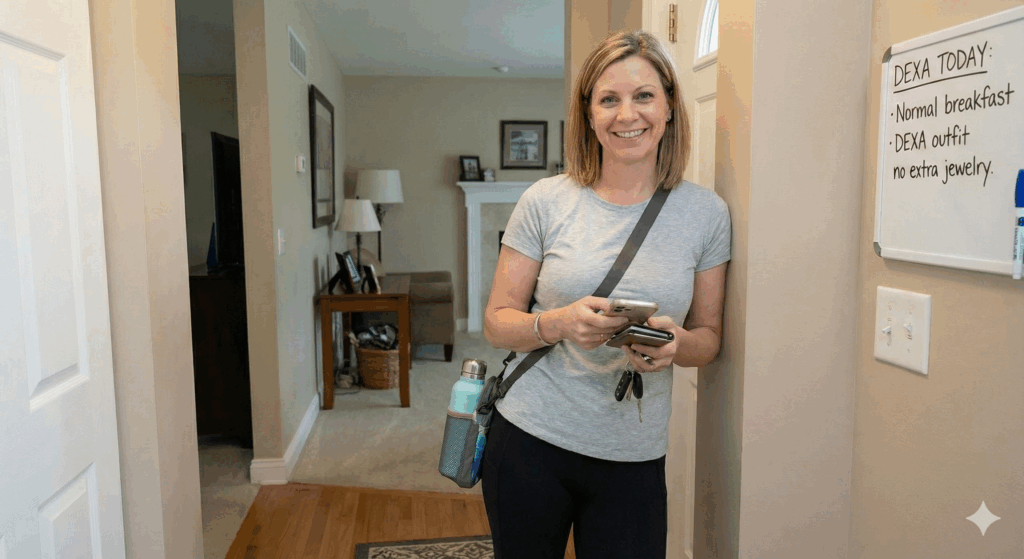
For the most consistent results: stay well-hydrated but avoid eating a large meal 2–3 hours before your scan, avoid intense exercise the morning of your appointment, wear lightweight clothing without metal (zippers, underwire), and remove jewelry. If you’re tracking changes over multiple scans, try to scan at the same time of day under similar conditions.
How often should I get a DEXA scan? +
We recommend scanning every 8–12 weeks if you’re actively training or dieting. This gives your body enough time to show measurable changes in fat and lean mass. For general health monitoring, 2–3 scans per year is a solid cadence. Athletes in competition prep may benefit from more frequent scans during peaking phases.
Is the radiation from a DEXA scan safe? +
Yes. A DEXA scan exposes you to roughly 0.001 mSv of radiation — about 1/10th of a chest X-ray and less than you’d receive during a cross-country flight. It’s one of the lowest-radiation imaging methods available and is considered safe for regular use.
What does my visceral fat (VAT) score mean? +
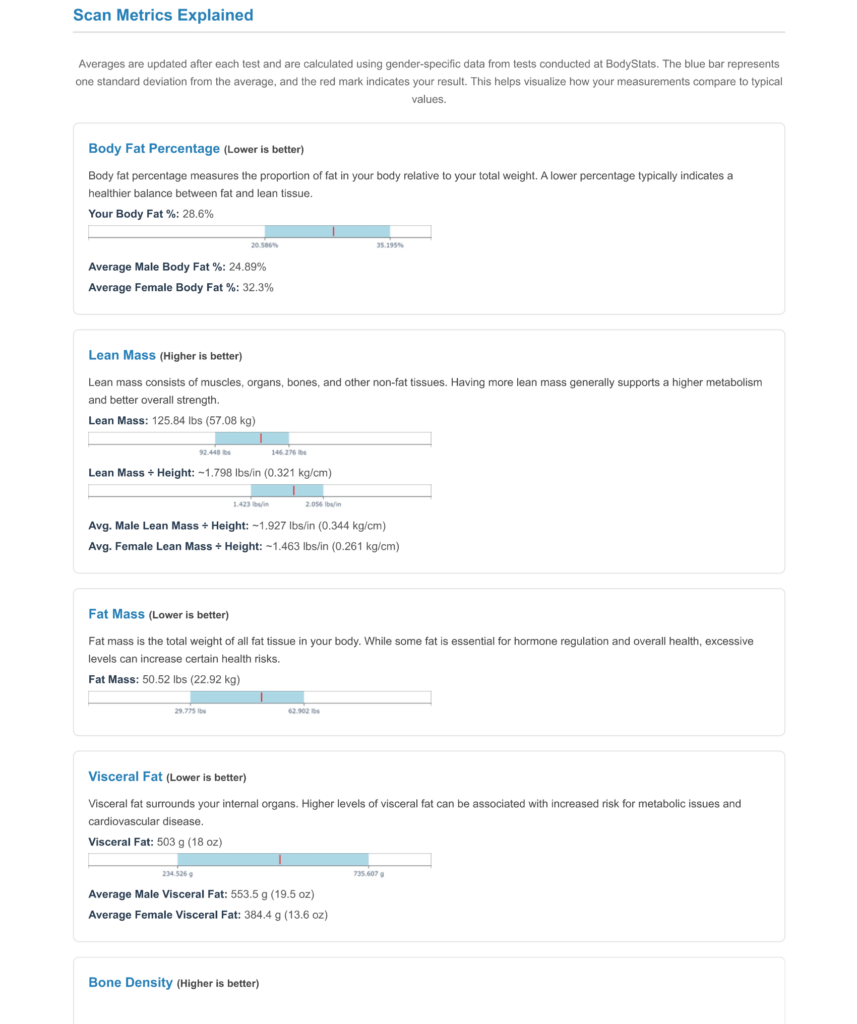
VAT (Visceral Adipose Tissue) measures the fat surrounding your internal organs. It’s one of the strongest predictors of metabolic health risk. A VAT area under 100 cm² is generally considered healthy. Your DEXA report shows your exact VAT volume, which is far more precise than waist circumference or BMI for assessing this risk.
What’s the difference between DEXA and an InBody or smart scale? +
InBody and smart scales use bioelectrical impedance (BIA), which sends a small electrical current through your body and estimates composition based on resistance. BIA accuracy can swing 4–8% depending on hydration, meal timing, and even skin temperature. DEXA uses X-ray technology and is accurate to 1–2%, plus it gives you a full regional breakdown — left vs. right, arms, legs, trunk — that BIA simply can’t provide.
Where are your locations? +
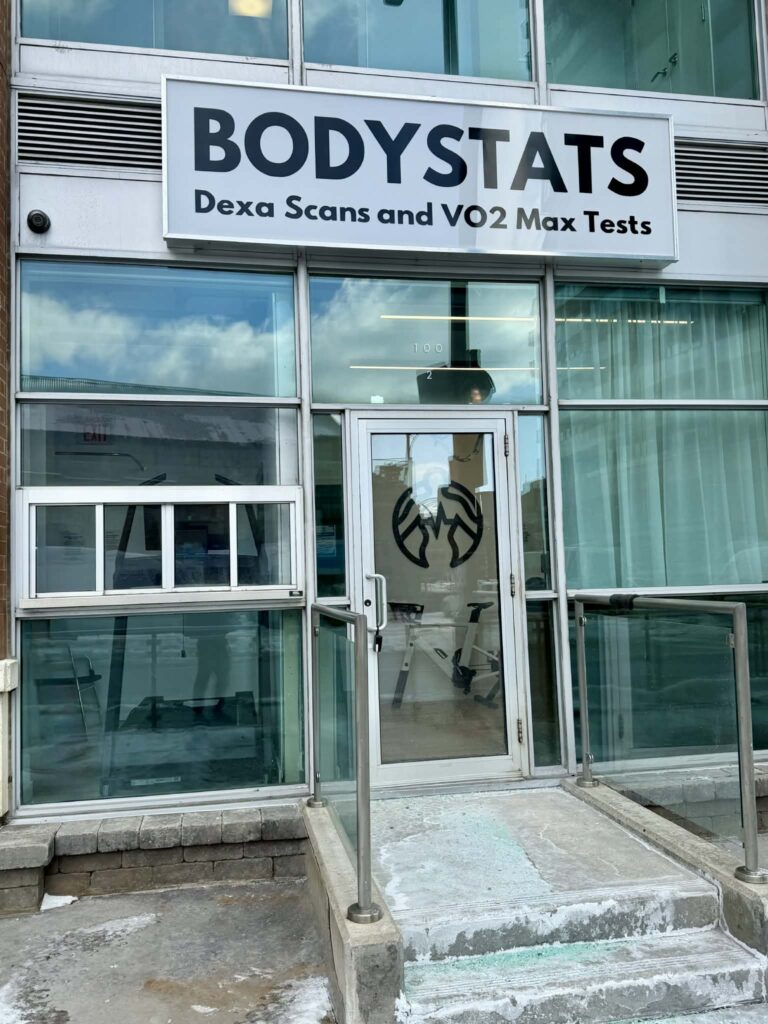
In Vancouver, visit BodyStats Gastown Dexa Scan Vancouver at 316 Carrall Street, Vancouver, BC V6A 1K2 or BodyStats Yaletown Dexa Scan Vancouver at 1118 Homer Street, Unit 114, Main Floor, Vancouver, BC V6B 2G2; both use +1 (604) 259-9132For support, please use our contact form.. BodyStats Dexa Scan Toronto is at 100 Western Battery Road, Unit 2, Toronto, ON M6K 3S2 (+1 (647) 558-0464For support, please use our contact form.). Compare Vancouver locations and hours. We also offer mobile DEXA testing for gyms, sports teams, and corporate wellness programs.