

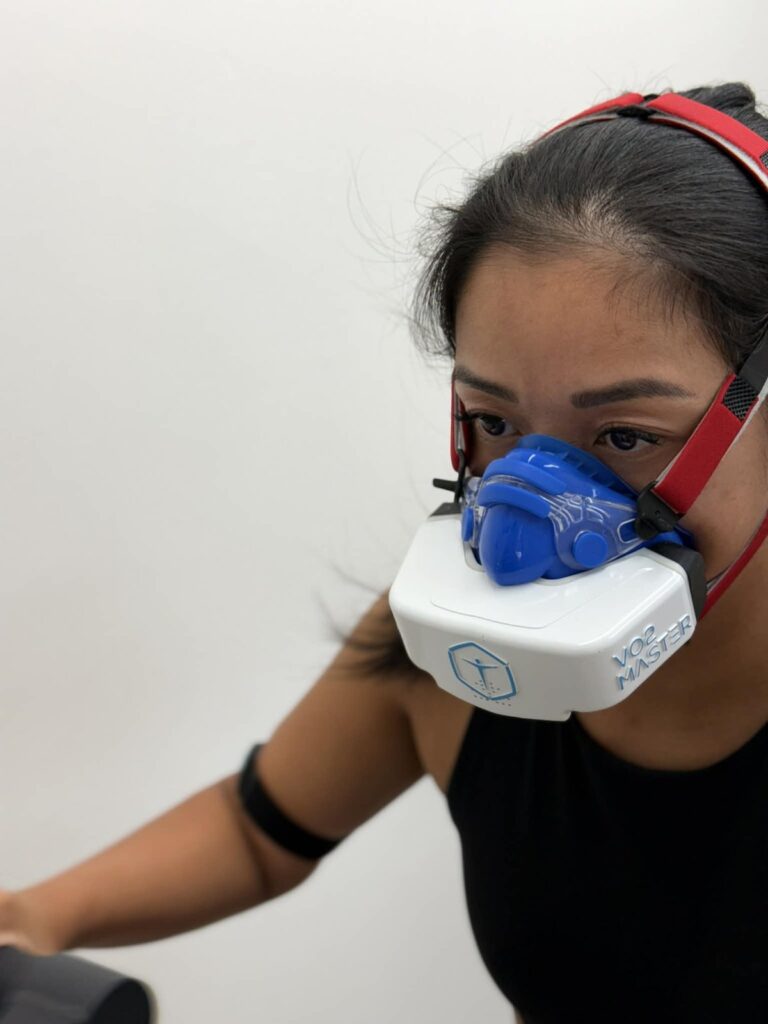
VO2 Max Testing in Toronto, Done Properly.
Metabolic cart, graded protocol, 24-minute appointment, full report walkthrough — and your VO2 history tracked in your BodyStats dashboard alongside body comp.
Book Toronto VO2 MaxIf you’ve been searching for VO2 max testing in Toronto in 2026 and ended up reading about university physiology labs and sports-medicine clinics with phone-only booking, you’re in the right place. Our Liberty Village studio runs full lab-grade VO2 max testing with a metabolic cart, online booking, and a complete report walkthrough — in 24 minutes.
- VO2 max testing in Toronto: BodyStats Liberty Village studio.
- 24-minute appointment, treadmill or bike, full report.
- Online booking, no referral required.
- Optional bundle with a DEXA scan in the same appointment.
What we test
A VO2 max test measures the maximum oxygen your body can use during exercise — the gold standard of cardiorespiratory fitness. The number captures the integrated function of your heart, lungs, vasculature, and muscle mitochondria. It’s the strongest single predictor of all-cause mortality we have, stronger than smoking, blood pressure, or diabetes.
Your full report includes:
- VO2 max in ml/kg/min and ml/min.
- VT1 (aerobic threshold) — the intensity above which you start using significantly more carbohydrate.
- VT2 (lactate threshold) — the limit of sustainable hard effort.
- Heart rate at each threshold for setting training zones.
- Maximum heart rate, ventilation, and breathing frequency.
- Percentile rank against age- and sex-matched populations.
What the test is like
- Setup (5 minutes). You arrive in workout clothes. We fit a VO2 mask, calibrate the gas analyzer, review your medical questionnaire.
- Warm-up (3 minutes). Easy walking on the treadmill or low-watt cycling.
- Graded protocol (10–12 minutes). Effort increases every 1–3 minutes — speed, incline, or watts. Each stage gets harder until you reach voluntary exhaustion.
- Cooldown and walkthrough (5 minutes). We open your report, explain every number, and translate it into actual training zones for your watch.
Total appointment: 24 minutes. The hard part is the last 2 minutes. Everything before is uncomfortable but manageable — we coach you through it.
Why test in Toronto specifically
If you’ve trained for any endurance sport in Toronto — marathon, triathlon, cycling, rowing — you’ve probably been told to “train in Zone 2.” But Zone 2 from a generic age formula (220 minus your age) is wrong for most people. Real Zone 2 is below your VT1, and only a VO2 max test reveals where your VT1 actually is.
You can’t train at threshold without knowing where your threshold is. Garmin’s auto-detected zones are a common reason people plateau.
How to prepare
- Skip caffeine for 4 hours before the test.
- Light meal 2–3 hours before. Don’t test on a full stomach.
- Normal hydration — don’t carb-load or drink a litre of water in the hour before.
- Rest day before. Easy training the day of is fine.
- Wear actual workout clothes. Moisture-wicking shirt, athletic shorts or tights, supportive shoes.
Pairing with DEXA
VO2 max and DEXA measure different things — cardiovascular fitness vs body composition — and together give you the full picture. Body composition tells you where you are; VO2 max tells you what your body can do. Most serious clients do both.
Bundling them in one appointment saves time and money. The total appointment runs about 90 minutes for both. Plus, every scan logs to your BodyStats dashboard so you can track both numbers over time in one place.
Frequently asked questions
Where in Toronto can I get a VO2 max test?
BodyStats Toronto in Liberty Village. Some sports-medicine clinics and university labs also offer testing — typically by appointment with phone booking, at higher prices.
Do I need to be in shape to do the test?
No. The protocol is graded — it ramps to your individual maximum. Beginners reach exhaustion at lower stages; trained athletes go further. The test ends when you end it.
How accurate is the result?
Within ~3% of repeat measurements on the same person, given consistent prep. The biggest source of variability is effort on the day. Caffeine, sleep, and hydration also affect it slightly.
How often should I retest?
Every 12–16 weeks if you’re actively training to improve VO2 max. Every 6–12 months otherwise.
Should I test on the treadmill or bike?
Whichever you train in. Runners test on the treadmill; cyclists on the bike. Cross-modal results aren’t directly comparable — your bike VO2 will read 5–10% lower than your treadmill VO2 if you’re a runner who doesn’t ride often.
Real training zones, not generic formulas.
Book a VO2 max test in Toronto. Liberty Village studio, full report, training-zone walkthrough, dashboard tracking.
Book Toronto VO2 Max