

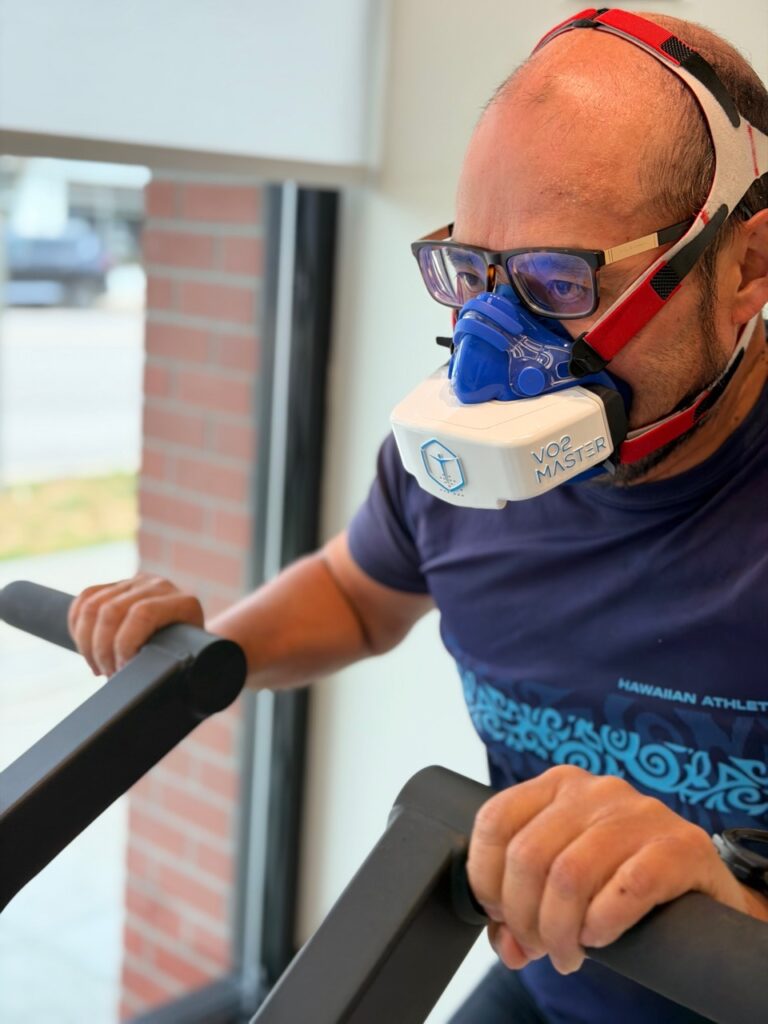
With a fixed treadmill test, one person is done at six minutes while another is still jogging at fifteen. Neither gets a great result. Our new adaptive VO2 Max test fixes that by adjusting to your heart rate every minute, so most people reach their true max about nine minutes in. Our RMR test got the same treatment. Both are in open beta at BodyStats Fraser on Saturdays from October 24.
Why fixed steps don’t work for everyone
Classic protocols like the Bruce test get harder every three minutes, on the same schedule for everyone. For some people the jumps are too big and their legs quit early. For fitter people the test drags on, and they stop before reaching their real max. Either way, the number comes in lower than it should.
How the adaptive VO2 Max test works
- Easy warm-up at about 1.7 mph.
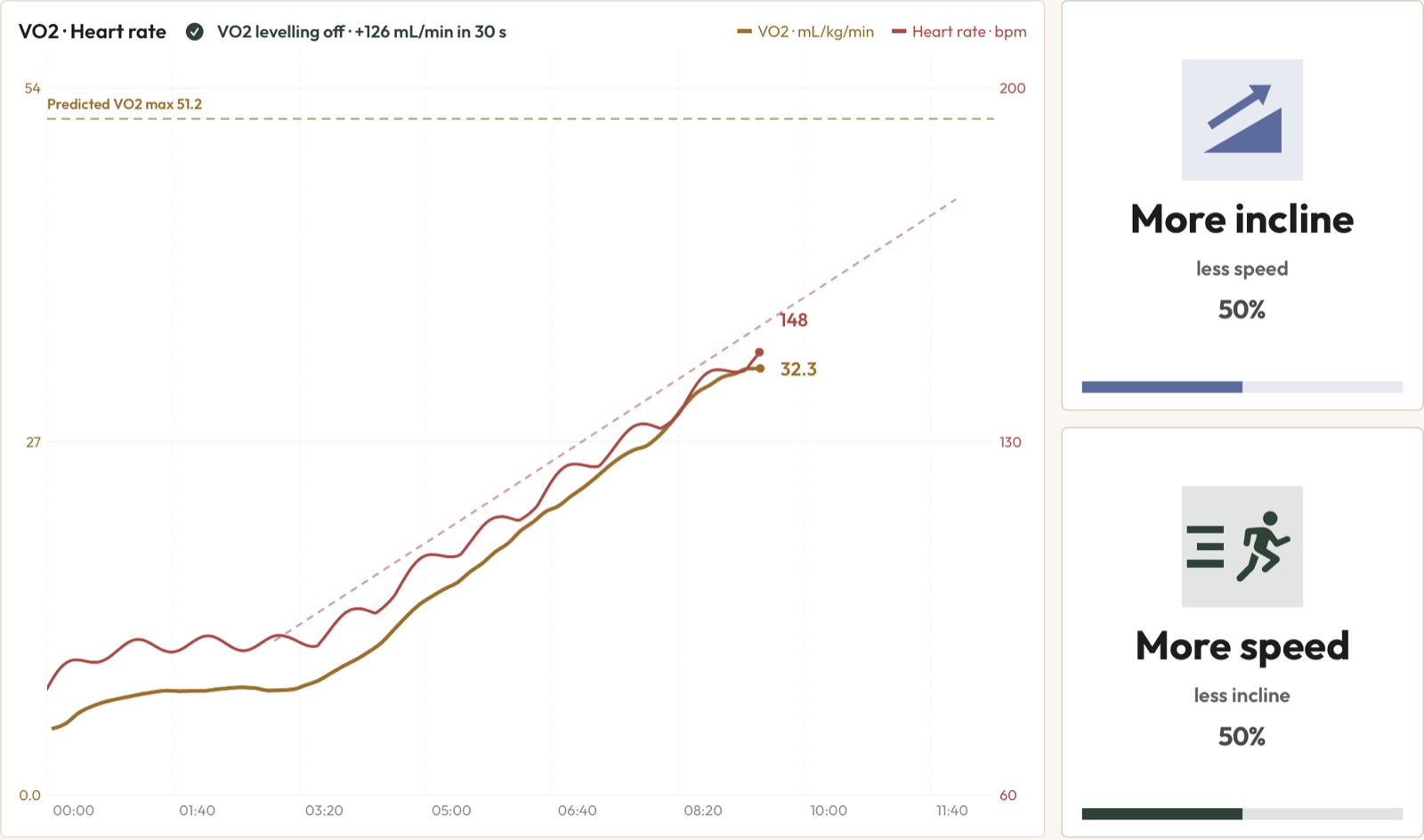
- A line to your max. The iPad draws a line from your warm-up heart rate to your estimated max, about nine minutes away. The estimate comes from more than 800 BodyStats treadmill tests.
- Follow the line. Every minute, if you’re behind the line, the treadmill adds a little incline and speed. Small steps, no sudden jumps.
- Final push to a true max.

On the air bike, the BodyStats Lab coach tells you when to push harder or ease off to stay on the line.
We tested it in simulation across a wide range of fitness levels before using it with customers:
| Adaptive test | Best fixed ramp | |
|---|---|---|
| Reached max in 7 to 11 minutes | 86% | 52 to 58% |
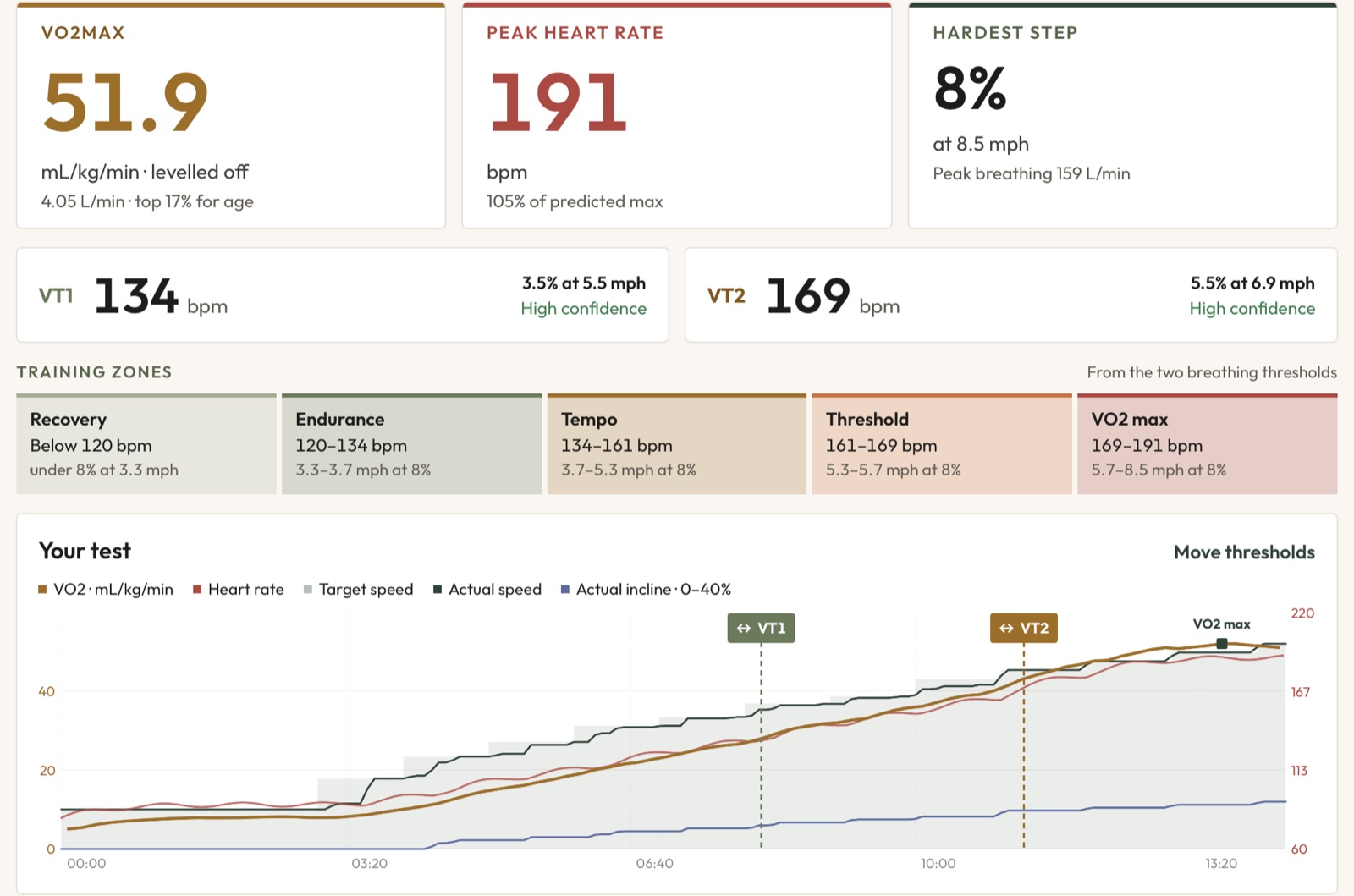
You get the full report: VO2 Max, peak heart rate, both breathing thresholds and five training zones. More on our VO2 Max test page.
Steady-State RMR: your most rested 5 minutes
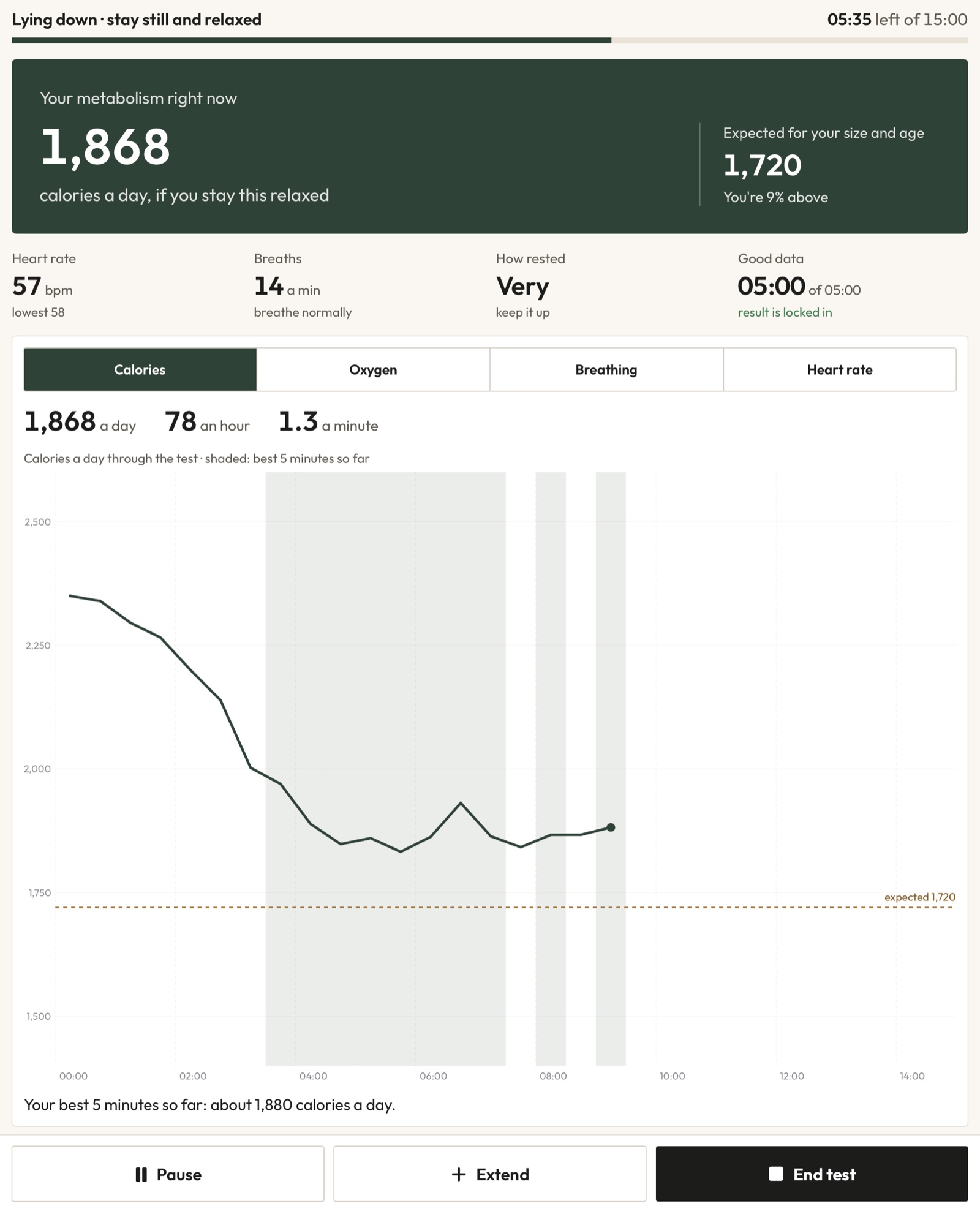
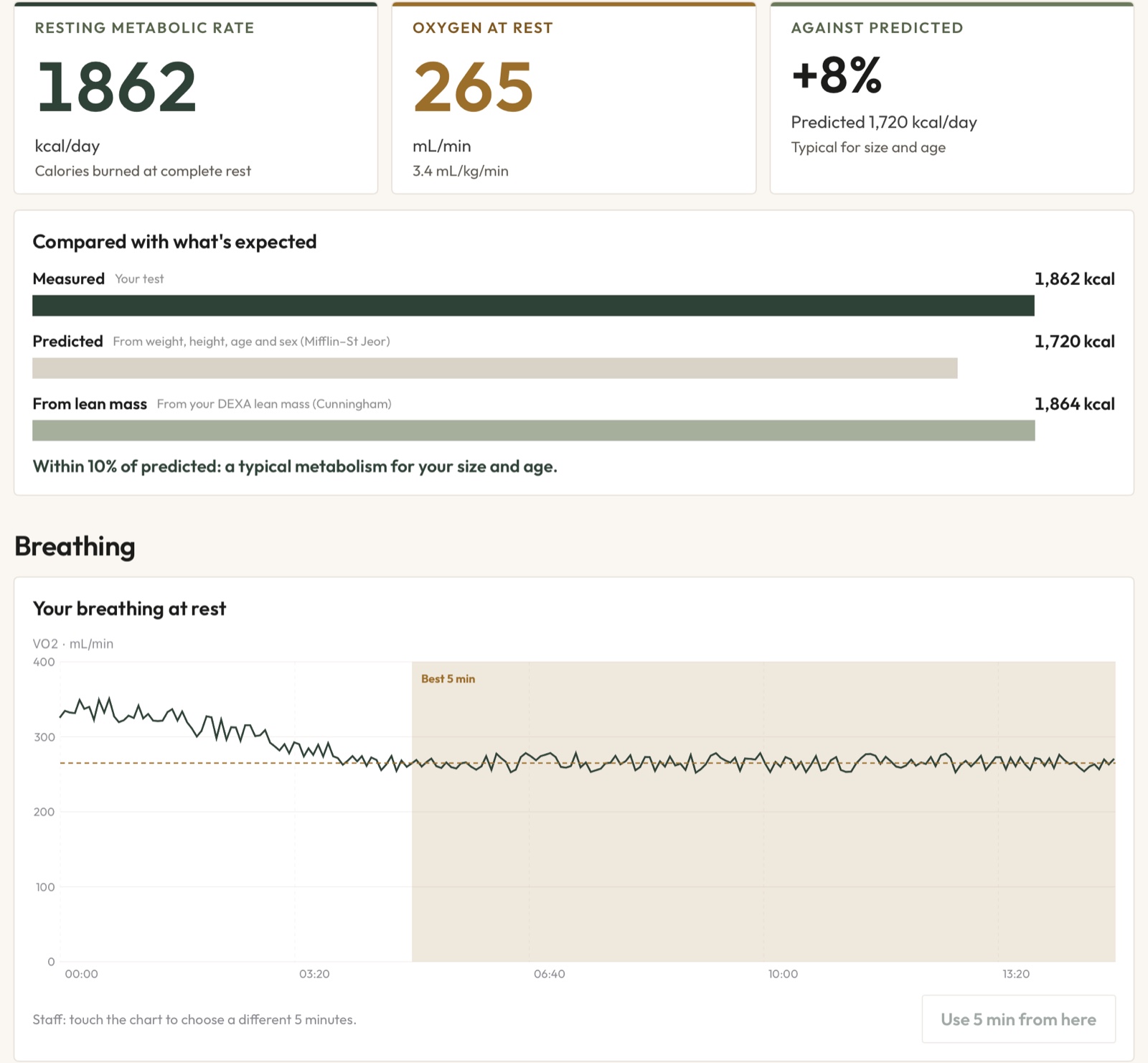
Most RMR tests skip a fixed settle-in time, then average a fixed window. But some people settle in four minutes and others take twelve. So we now use your most stable, fully rested 5 minutes from anywhere in the test. If you need longer, staff extend the test instead of restarting it. More on our RMR test page.
Also at BodyStats Fraser
- Lactate Threshold Test (Beta), on its own or added to your VO2 Max test. Includes up to 10 single-use, laboratory-grade lactate test strips.
- Strength Testing (Beta)
- 3D Body Scan & Print
No DEXA at Fraser yet. Book DEXA at Gastown, Yaletown or Toronto.
Try the adaptive tests at BodyStats Fraser
Saturdays from October 24, 3558 Fraser St, Vancouver.